Family
Pediatric Hearing Care
Children can't always tell us what they're hearing. Pediatric audiology is about listening for them — with tests designed around a child's stage of development, and appointments paced for their comfort.
Plan for · Family-friendly
What's Included
Everything that happens in the room.
- Otoacoustic emissions (OAE) — newborns and non-testable children
- Visual Reinforcement Audiometry (VRA) — infants and toddlers
- Conditioned Play Audiometry (CPA) — preschool through early school age
- Standard audiometry for older children
- Tympanometry and middle-ear reflex measurements
- Speech-in-noise testing for suspected auditory processing concerns
- Referrals to ENT, speech-language pathology, and early intervention
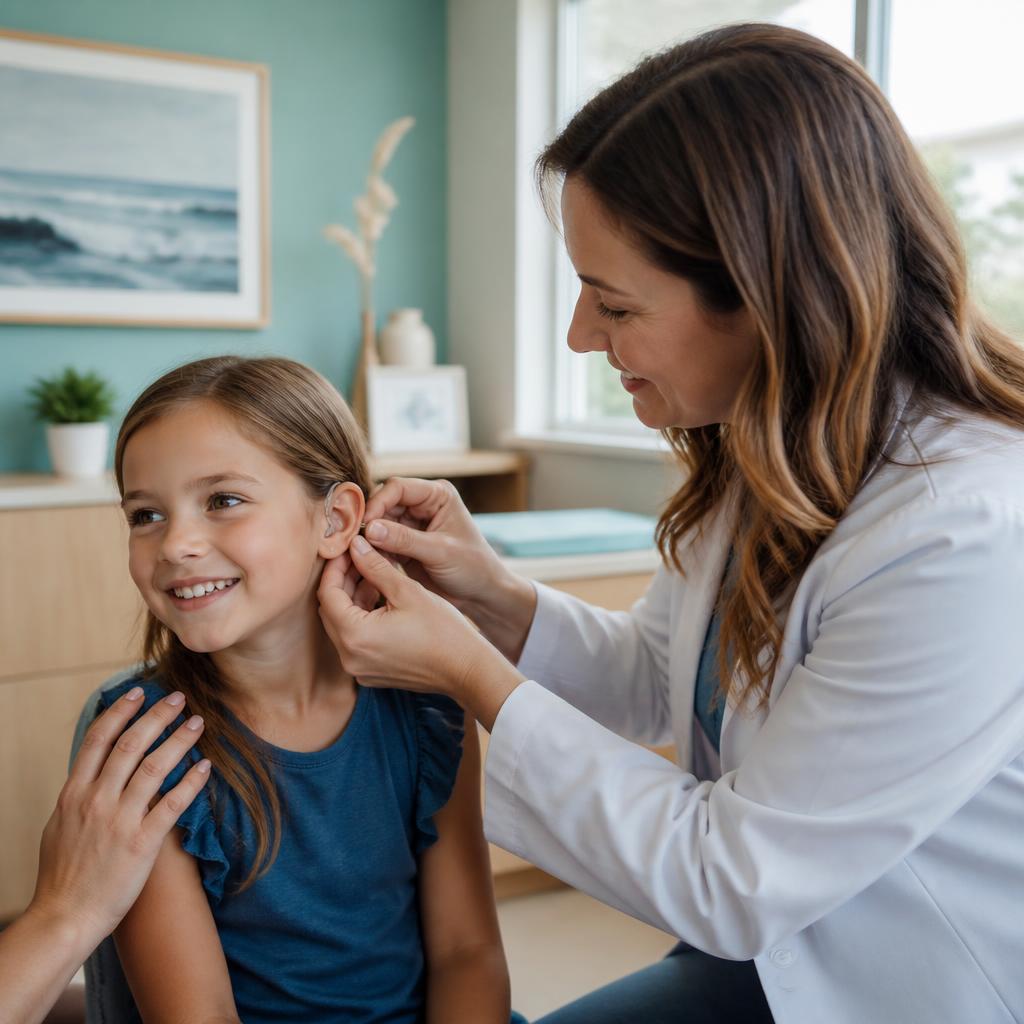

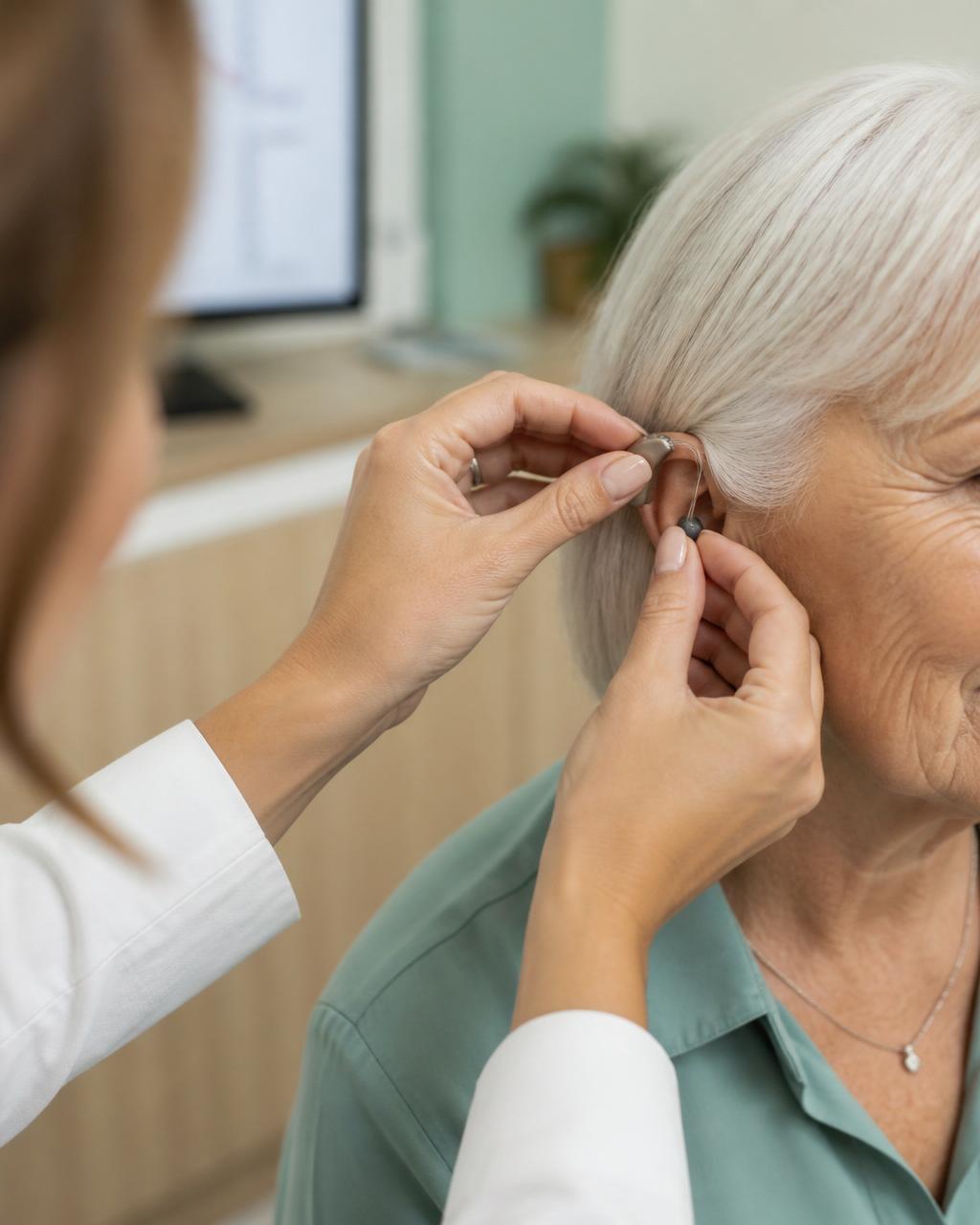
Testing that matches the child
Pediatric audiology is a different discipline from adult diagnostics. Children can't always tell us what they hear, and their attention, patience, and developmental stage shape which tests are valid on a given day. We use otoacoustic emissions (OAE) for newborns and non-testable children — a physiologic measure that requires only that the child sit still, often while sleeping. For infants and toddlers, visual reinforcement audiometry (VRA) pairs sounds with visual rewards to condition a repeatable head-turn response. For preschool and early school-age children, conditioned play audiometry (CPA) turns the test into a game: drop a block when you hear the beep. Older children move to standard audiometry. In every case, tympanometry and acoustic reflexes screen for middle-ear fluid, which is the most common and most treatable cause of temporary hearing loss in kids.
Why early identification matters
The first three years of life are when the auditory cortex builds the neural infrastructure for language. Undetected hearing loss during that window — even mild or unilateral loss, and even loss that comes and goes with recurrent ear infections — can delay speech, narrow vocabulary, and cascade into reading difficulty at school age. Universal newborn hearing screening catches the majority of congenital loss, but progressive, acquired, and mild losses often slip through. If your child failed a hospital screen, missed a language milestone, is falling behind classmates in noise, or has recurrent ear infections, don't wait. Diagnostic testing at any age is worth doing, and the tests are painless.
What a family-friendly visit looks like
Plan for 45 to 75 minutes. We build in breaks and pace the appointment to the child rather than the clock. Parents stay in the booth. We use age-appropriate reinforcement — puppets, animated screens, small rewards — and we don't press through resistance; if a child needs to reset, we reset. Results are shared with parents in plain language before you leave, with a written report that follows within a few days. When findings warrant it, we coordinate warm referrals to pediatric ENT, speech-language pathology, and early-intervention services rather than sending you home with a phone number and a shrug.
School-age listening, APD, and the classroom
Some children pass a peripheral hearing test and still struggle to follow instructions in a noisy classroom, mishear similar-sounding words, or fatigue quickly during listening-heavy tasks. That pattern often points to an auditory processing concern rather than a hearing loss per se — the ears deliver the signal, but the central auditory pathway has trouble organizing it in noise or under time pressure. For school-age children we coordinate with pediatricians, teachers, and school SLPs to sort a genuine auditory processing question from attention, language, or reading contributions that can look similar in a classroom. When indicated, we discuss remote-microphone systems that put the teacher's voice directly into the child's ears — one of the most consistently effective interventions in the literature for kids who hear the words but lose them in noise. We also counsel families on preferential seating, teacher awareness, and the small acoustic adjustments (rug on the floor, tennis balls on chair legs) that meaningfully reduce classroom reverberation. Hearing care for children is longitudinal by design; we build relationships with families and re-check at intervals that match your child's development rather than a rigid annual template.
How It Goes
The process, step by step.
01
Family history
We take time to understand your concerns, birth history, and any milestones we should know about.
02
Age-appropriate testing
The test method changes with the child. OAE, VRA, CPA, or conventional audiometry as fits.
03
Middle ear check
Tympanometry catches fluid, negative pressure, and eustachian-tube dysfunction — common causes of temporary loss.
04
Next steps
Clear results shared with parents. When needed, coordinated referrals to ENT, SLP, or early intervention.
Who It's For
You might book this if…
- Newborns who failed a hospital screening
- Toddlers with delayed speech or missed milestones
- School-age children flagged by teachers or in vision-hearing screenings
- Children with recurrent ear infections
- Kids struggling to follow conversations in noise
Common Questions
FAQs.
- What age can you test?
- Any age. Newborns are tested via OAE; toddlers via VRA; older children with play audiometry or standard techniques.
- How long is a pediatric appointment?
- Plan for 45–75 minutes. We build in breaks and pace to the child's comfort.
- Do you fit pediatric hearing aids?
- We fit school-age children when appropriate. Younger children are typically co-managed with a pediatric audiology center specializing in infant amplification.
Related at Z Audiology
Keep reading.
- Hearing aid brands we fit — Starkey, Widex, Signia, Oticon, Phonak, and ReSound.
- Meet Dr. Chana Zelenko, Au.D. — the audiologist who wears hearing aids herself.
- Hearing health guide — how hearing loss, cognition, and tinnitus connect.
- Service areas near Boca Raton — Delray, Boynton, Highland Beach, Deerfield, and more.
- Patient reviews — 5-star Google rating from our patients.
- Request an appointment — a short intake to get you on the schedule.
Also at Z Audiology
Comprehensive Hearing Tests & Evaluations
Doctoral-level hearing tests and diagnostic evaluations in a sound-treated booth. You'll leave with a full picture — audiogram, results explained, and a clear recommendation.
Learn moreHearing Aid Consultation & Fitting
Independent selection across Starkey, Widex, Signia, Oticon, Phonak, and ReSound. Real-ear verification. Follow-through until it's right.
Learn moreHearing Aid Repairs & Adjustments
Clean-and-checks, reprogramming, receiver and dome replacement — for devices we fit and devices you brought with you.
Learn more